
Systems
How a business carries the work after you step out of the daily decisions.
Coming soon
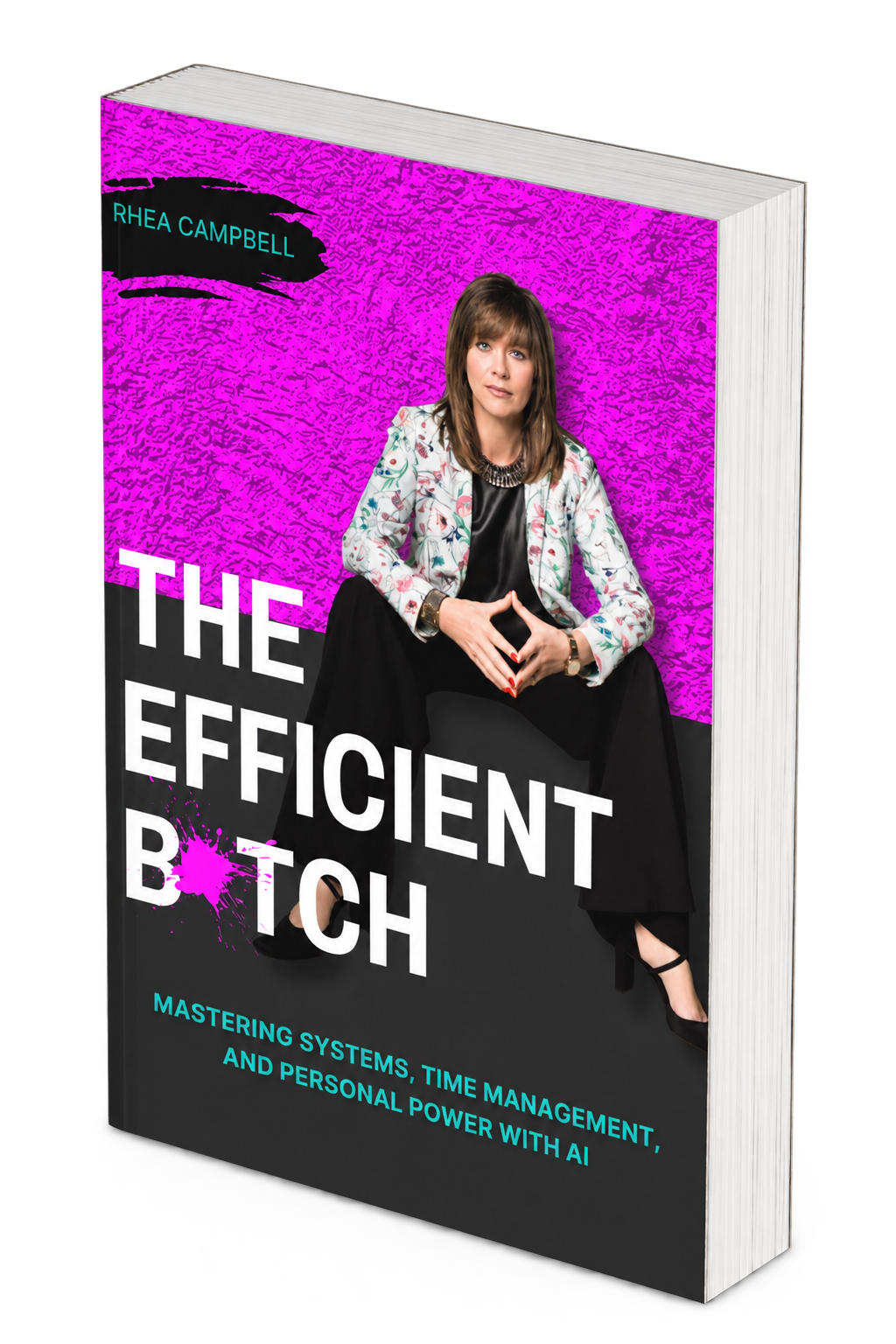
The Efficient B*tch · Launching June 2027
Mastering Systems, Time Management, and Personal Power with AI
Join the launch list for Chapter One, book updates, and a chance to receive the Efficient B*tch Launch Package when the book becomes available.
What’s inside
How a business carries the work after you step out of the daily decisions.
Where the hours go, and what you hand to a system.
The judgment you keep when the machine can run the rest.
Practical use inside a real company, from the operator who sold one.
Why I wrote it
“They were not buying me. They were buying proof that the business could run without me.”
I wrote The Efficient B*tch for operators who are still the answer to everything. The sale to private equity showed me what a business is worth when it can run without the founder. The book is that lesson: systems, time, and the judgment you keep, with AI doing the work that should not need you.
The Efficient B*tch Launch Package
This is for people who want the book, the systems behind it, and a closer look at the work that turns a business into an asset.
The Efficient B*tch
Chapter One
Stop Thinking in Deals. Start Thinking in Systems.
When private equity offered to buy my company, I spent about thirty seconds feeling proud and the rest of the conversation trying to understand what they actually saw.
The offer was not based on what I earned that year. It was based on what the business would produce after I left. They were paying a multiple on a machine: documented systems, a team with clear accountability, repeatable workflows, and assets that did not require my daily presence to keep running. They were not buying me. They were buying proof that the business could run without me.
That realization sat with me longer than the number did.
I had spent years thinking like an operator. Find the opportunity, execute well, and move to the next thing. I was disciplined about deals. I knew how to underwrite, manage people, and close in difficult situations. By every conventional measure, I had figured out how to build a business.
But I had not designed it to compound.
The exit was the proof that I could build something worth owning. It was also the moment I understood why and started building the next one differently.